
Exercise 1: Follow a Pointer
What to do
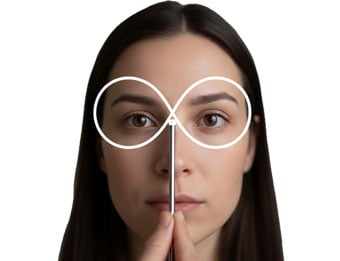
- Make sideways figure-eight shapes in the air while your eyes follow the tip of the pointer.
- Do this three times to the right and three times to the left.
- Keep the pointer about 3–4 inches in front of the face.

- Move the pointer from chin to hairline and have eyes track the tip of the pointer.
- Repeat three times.
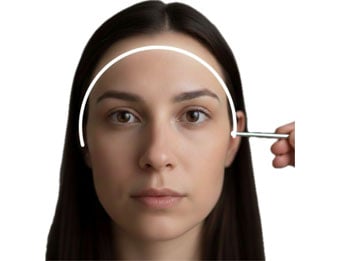
- Move the pointer from ear to ear, like drawing rainbows across the face while eyes track the tip of the pointer.
- Repeat three times.
Exercise 2: Massage Ocular–Muscular Connection Points
Follow this sequence:
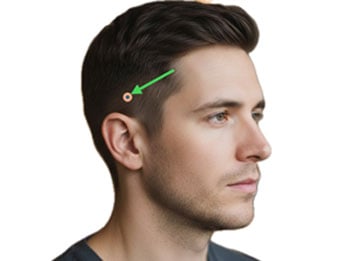
- Place two fingers just above where the ear connects to the head.
- Press firmly for 3–5 seconds.

- On the forehead, midway between the eyebrows and hairline.
- Press two fingers firmly above each eye for 3–5 seconds.
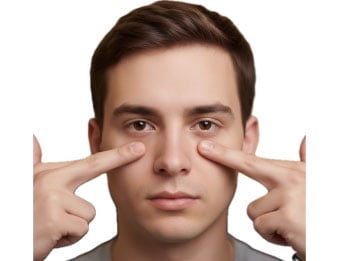
- On the tops of the cheekbones.
- Use light tapping with fingers for 3–5 seconds.
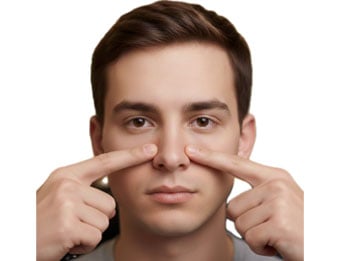
- Place one finger on each side of the nostrils.
- Push back and slightly up, hold for 3–5 seconds.
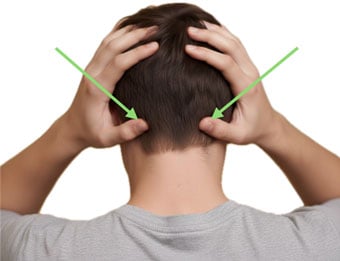
- Massage small circles where the base of the skull meets the top of the neck (the suboccipital muscles).
- Use firm pressure for 3–5 seconds.

- Use all fingers to massage the scalp near the center line of the head.
- Start in the back and move forward to the forehead, gently wiggling the scalp with firm presses.
This sequence relaxes tight muscles that can interfere with eye movement.
Exercise 3: Palming with Infinity Circles
This is a calming exercise that rests the eyes while still reinforcing coordination.
How to do it
- Warm the hands by rubbing them together.
- Gently place the bottoms of the palms over closed eyes—no pressure on the eyeballs.
- While the hands are in place, move your eyes in the same infinity symbol as in Exercise
- Three times in each direction.
- Three times in each direction.
- Follow the movement with eyes behind closed lids.
Before opening the eyes, you should see only solid black, purple, or indigo—no flashes or specks of light.
This helps the visual system reset and reduces eye strain.
Exercise 4: Beads for Focusing and Teamwork
This exercise builds strong convergence, which means both eyes working together to focus on the same spot.
What you’ll need
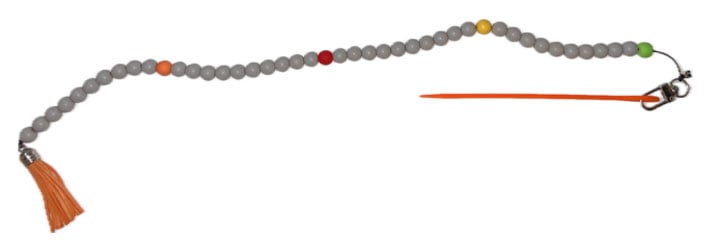
Bead string (Available for purchase from Eyes Up Reading or you can make your own)
Steps
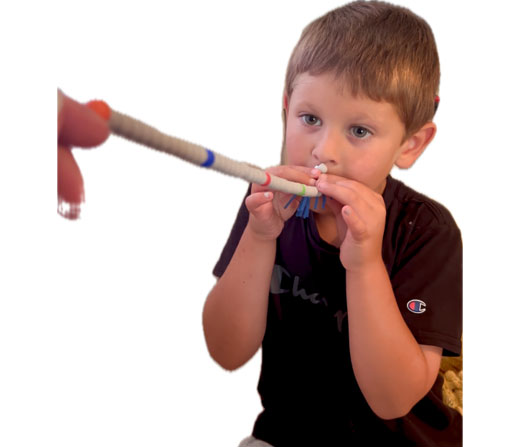
- Place the beads under the nose so the farthest bead is a colored bead.
- Angle the other end slightly downward or upward, like an extension of the nose.
- Have someone call out bead colors in a random order.
- The child finds that bead with their eyes and holds focus for 3 seconds.
- Continue for 10 color calls.
Why These Exercises Matter
Reading isn’t just about knowing the words—it’s about how the eyes move across the page, stay aligned, and stay comfortable. When those systems are stressed, reading can feel exhausting, frustrating, or even painful.
These simple exercises help:
- Improve eye tracking
- Strengthen alignment
- Reduce visual fatigue
- Build confidence and comfort with reading
Questions? You can reach out to us anytime.
We would love to hear from you and help you walk through these exercises or simply talk through your reading struggles.